Laser Cutting Melbourne: A Technical Guide for Commercial and Industrial Buyers
How fibre laser cutting works, what tolerances and materials are achievable, and how to specify your next laser cut job from a Melbourne workshop.
Laser cutting is one of the most precise and efficient methods available for cutting sheet metal. If you are a commercial or industrial buyer sourcing laser cut parts in Melbourne, understanding the process helps you specify smarter, get better prices, and avoid rework.
This guide covers how fibre laser cutting works, what to expect from a professional Melbourne workshop, and how to prepare your drawings for a clean, fast quote.
How fibre laser cutting works
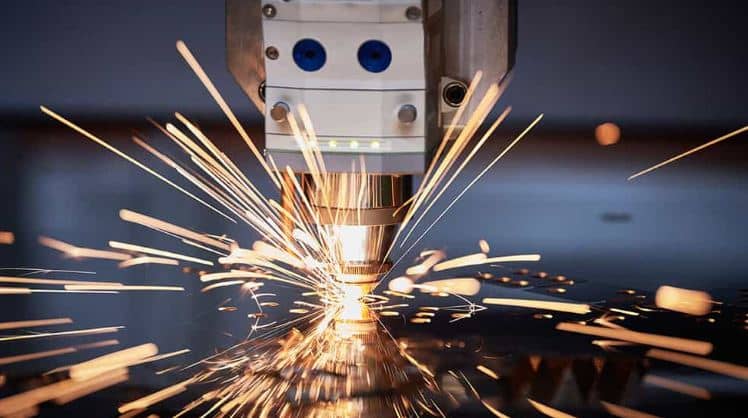
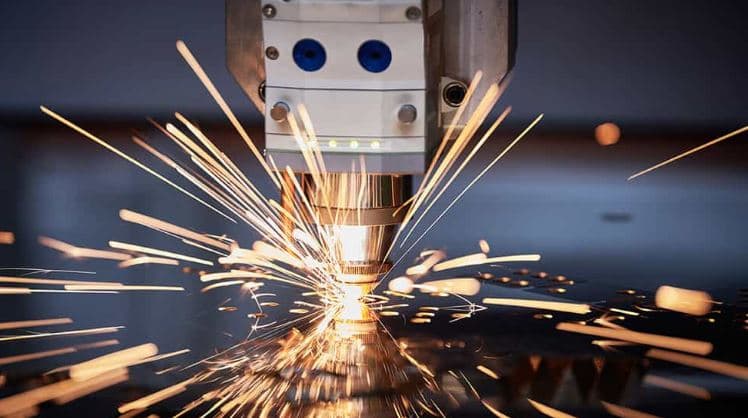
A fibre laser uses a high-powered, focused beam of light — generated through optical fibres doped with rare-earth elements — to melt and vaporise sheet metal along a programmed path.
The key variables are:
- Laser power (kW) — determines maximum material thickness and cutting speed
- Assist gas — nitrogen produces clean, oxide-free edges on mild and stainless steel; oxygen is used for faster cutting of thicker mild steel
- Feed rate — speed of the cutting head relative to the sheet
- Focal point — precisely controlled to suit the material thickness
Modern fibre lasers are significantly faster than older CO₂ lasers on thin sheet and achieve excellent edge quality across the full range of common fabrication materials.
What materials can be laser cut?
At our Moorabbin workshop, we regularly cut:
| Material | Common thicknesses | |---|---| | Mild steel (HR / CR) | 0.8 mm – 12 mm | | Stainless steel (304 / 316) | 0.8 mm – 8 mm | | Aluminium (5005 / 5052 / 6061) | 0.8 mm – 6 mm | | Galvanised / Zincanneal | 0.8 mm – 3 mm |
For commercial fabrication — enclosures, brackets, panels, frames — 1.2 mm to 3 mm mild or zincanneal steel covers the majority of jobs.
Tolerances: what to expect
For a well-maintained fibre laser on standard sheet:
- Positional accuracy: ±0.1 mm
- Cut width (kerf): 0.2 mm – 0.4 mm depending on thickness and material
- Edge squareness: within 1° on standard thicknesses
- Repeat accuracy: consistent across a production batch
These tolerances suit most structural, enclosure and architectural fabrication. Tighter tolerances for precision engineering components are achievable — specify them clearly in your drawing and our team will advise.
How to prepare your files for laser cutting
The fastest way to get an accurate quote and a good outcome is clean CAD files:
Preferred formats: - DXF or DWG (2D flat patterns) — ideal for laser - STEP or IGES (3D models) — we unfold in-house - PDF with dimensions — accepted for quoting, but slower and less accurate
Drawing checklist: - Include material type and thickness - Note any holes smaller than the material thickness (we will flag these) - Show bend allowances if the part is to be folded after cutting - Include finish specification (e.g. powder coat colour, galvanise, raw) - State quantity and any batch tolerance requirements
Avoid sending photos or hand sketches for production parts — they require re-drawing and add lead time.
Laser cutting for commercial enclosures and panels
Laser cutting is particularly well suited to:
- Custom sheet metal enclosures — precise apertures for screens, switches, cable entry, louvres and access panels cut in a single program
- Architectural screens and panels — intricate decorative patterns cut from mild steel, aluminium or stainless for cladding and interior fit-out
- Structural brackets and plates — mounting plates, gussets and flanges where bolt-hole positioning is critical
- Signage blanks — letters, logos and form-cut panels for powder coating and installation
Laser cutting combined with downstream fabrication
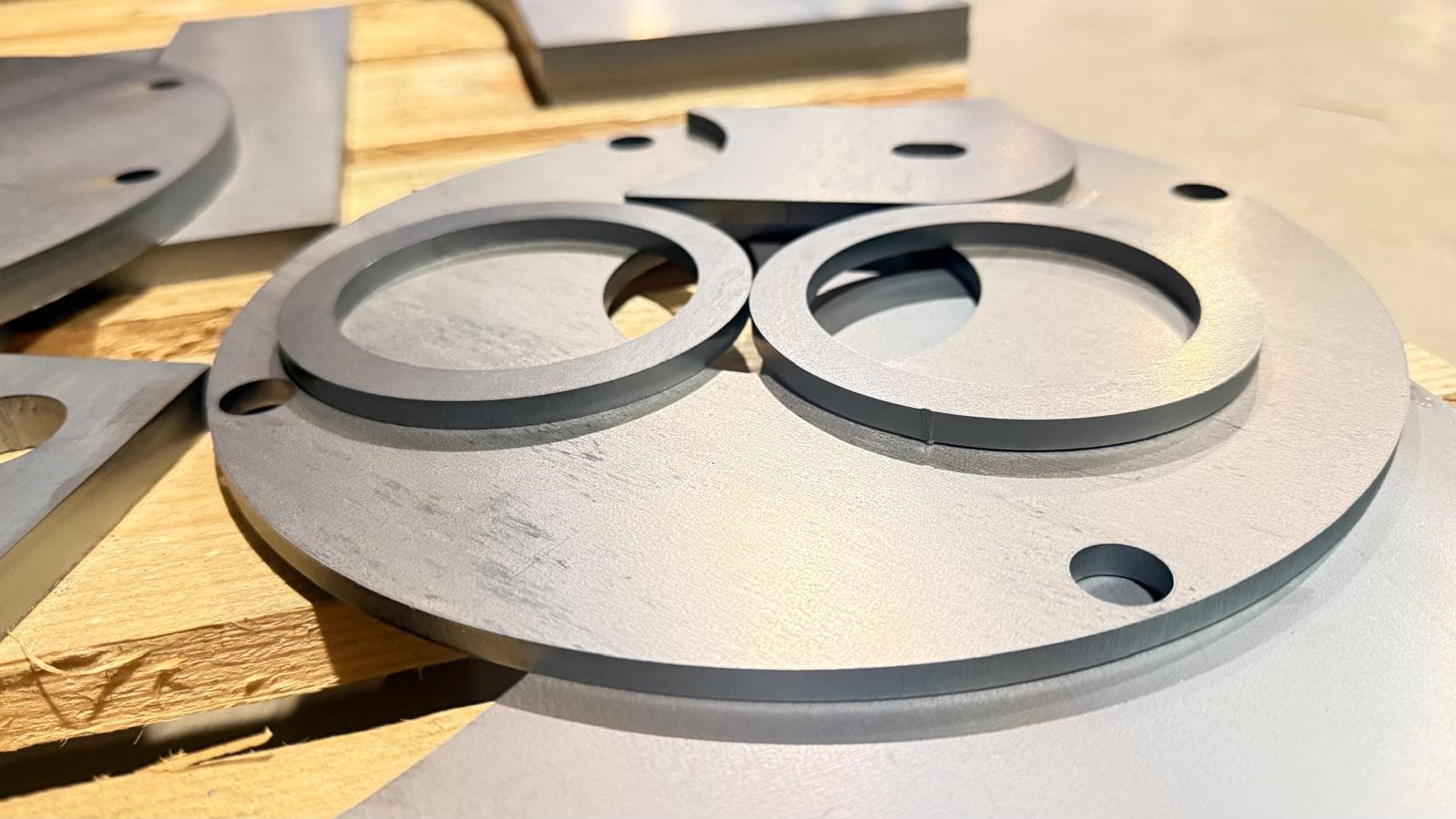
A laser cut blank is often the first step in a multi-process job. At Orion Metal Industries we combine laser cutting with:
- Press brake bending — forming flat blanks into 3D profiles, brackets and enclosure bodies
- Welding — joining laser cut components into assemblies
- In-house powder coating — hard-wearing colour finish applied after fabrication
- Assembly — hardware insertion, mounting and kitting
Having all these services under one roof in Moorabbin means fewer handoffs, consistent quality control and shorter lead times for your complete part.
Common questions from Melbourne buyers
Can you cut my 10 mm plate? Yes — on thick mild steel we use oxygen assist. Edge quality differs slightly from thin sheet; if you need tight tolerances on thick material, discuss this with us before ordering.
What is the minimum hole size? As a rule of thumb, minimum hole diameter equals material thickness. Smaller holes are possible but may require secondary operations.
Do you handle one-off prototypes? Yes. We run prototypes alongside production work. Send your file and quantity and we will quote both prototype and production pricing so you can plan.
How long does laser cutting take? For standard parts after drawing approval, typical lead time is 3–5 business days. We quote lead time with every order confirmation.
Do you ship outside Melbourne? Yes — we pack and dispatch to customers across Victoria, interstate, and to some international fabrication partners.
Getting a quote for laser cutting in Melbourne
To get a quote from our Moorabbin workshop:
1. Send your DXF, DWG, STEP or PDF to info@orionmetalindustries.com.au 2. Include material, thickness, quantity and finish 3. We return a quote within 24 hours
Or use our contact form or WhatsApp.
Visit or contact
Orion Metal Industries Pty Ltd 1A Bibby Ct, Moorabbin VIC 3189, Australia Phone: 0402 208 011 Email: info@orionmetalindustries.com.au Maps: Google Business Profile
We provide laser cutting, bending, powder coating and custom assembly under one roof for commercial and industrial clients in Melbourne and across Victoria, Australia. Request a quote or read our guides on powder coating in Melbourne and sheet metal fabrication in Moorabbin.
Related Articles
Sheet Metal Fabrication in Moorabbin: A Guide for Commercial Buyers
What to look for when choosing a sheet metal fabrication partner in Moorabbin and Melbourne for commercial and industrial projects.
Laser Cutting in Melbourne: Industrial Applications and Benefits
How precision laser cutting supports commercial and industrial manufacturing — applications, benefits, and when to use it.
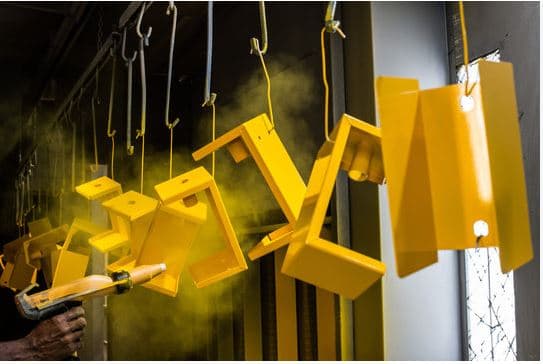
Powder Coating for Commercial Metal Fabrication: What You Need to Know
Why powder coating is the preferred finish for commercial metal fabrication — durability, appearance, and production efficiency.