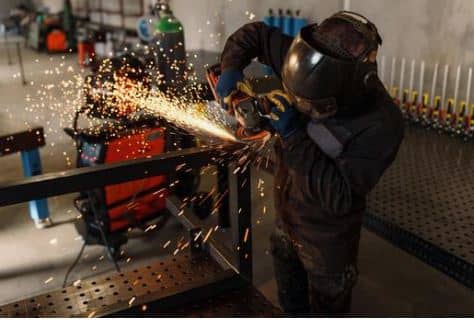
How Industrial Flap Discs Improve Metal Finishing and Fabrication Results
What flap discs do in a fabrication shop — weld blending, deburring and surface prep before powder coating — and how grit and backing affect enclosure and bracket quality in Melbourne.
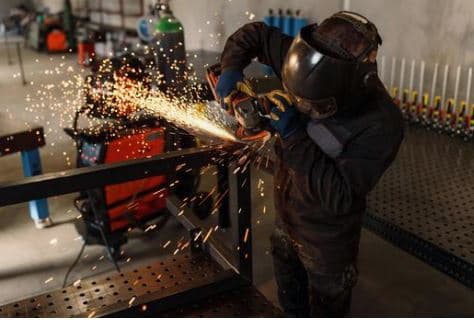
Industrial flap discs are abrasive discs made of overlapping cloth flaps on a backing plate. On a fabrication job they sit between welding and paint: they blend welds, knock off laser burrs and leave a surface that powder coat can hold.
They are a finishing tool, not a replacement for laser cutting or press brake work. Used well, they improve how a part looks, how it fits and how the coating lasts. Used poorly, they dish a face, undercut a weld or leave swirl that shows through gloss powder.
This is how flap discs improve metal finishing and fabrication results in a commercial workshop such as ours in Moorabbin, south-east Melbourne.
What a flap disc does that a grinding wheel does not
A depressed-centre grinding wheel removes metal fast and runs hot. It is for heavy stock removal, not a show face.
A flap disc:
- Cuts cooler and with more control
- Follows contours on welds and corners better
- Leaves a more even scratch pattern for coating
- Wears the flaps down instead of glazing as quickly on light work
For custom enclosures and brackets that will be powder coated, that control is the point.
Grit and backing — the two decisions that change the result
Grit (typical use in fabrication)
| Grit | Use | |---|---| | 40–60 | Heavy weld blend, mill scale, thick spatter | | 80–120 | General deburr after laser cut, light weld dress | | 180+ | Pre-coat finish on visible faces |
Start coarse only where you must. Jumping from 40 grit straight to powder coat on a door face leaves scratches that telegraph through gloss.
Backing
- Fibreglass / plastic backing — common, rigid, good on flats
- Trimmable / softer backing — better on tight inside corners of boxes
- Type 27 (flat) vs Type 29 (conical) — 29 is more aggressive on welds; 27 is flatter on panels you must not dish
Match disc diameter and speed to the grinder. Overspeed is a safety issue, not a finish trick.
Where flap discs sit in our process
1. Laser cutting — profile and holes 2. Press brake — folds 3. Welding / hardware 4. Flap disc (and related abrasives) — burrs, weld blend, edge break 5. Prep and powder coat 6. Assembly and dispatch
If step 4 is skipped, powder coat highlights every burr and undercut. If step 4 is too aggressive, wall thickness on a 1.6 mm door becomes uneven and the door oils-can.
Results you can specify on a drawing
You do not need to write “use a flap disc”. You do need to specify the outcome:
- Weld finish — as-welded, dressed flush, or ground blend
- Visible faces — coating will show grind marks unless grit is fine enough
- Edges — broken vs sharp (safety and paint wrap)
- Stainless — contamination from carbon-steel discs will rust; use dedicated stainless abrasives
We interpret those notes at quote stage. Send the drawing with material, thickness and finish.
What flap discs will not fix
- Wrong bend allowance or holes too close to a fold
- A catalogue enclosure with the wrong cutouts
- Powder coat colour not matching a physical chip
Finishing improves a correctly fabricated part. It does not replace full-service fabrication in one workshop.
Quote from Moorabbin
Orion Metal Industries fabricates and finishes commercial sheet metal at 1A Bibby Ct, Moorabbin VIC 3189. Send DXF, DWG, STEP or PDF via contact — quotes within 24 hours.
Phone: 0402 208 011
Related Articles
Sheet Metal Fabrication in Moorabbin: A Guide for Commercial Buyers
What to look for when choosing a sheet metal fabrication partner in Moorabbin and Melbourne for commercial and industrial projects.
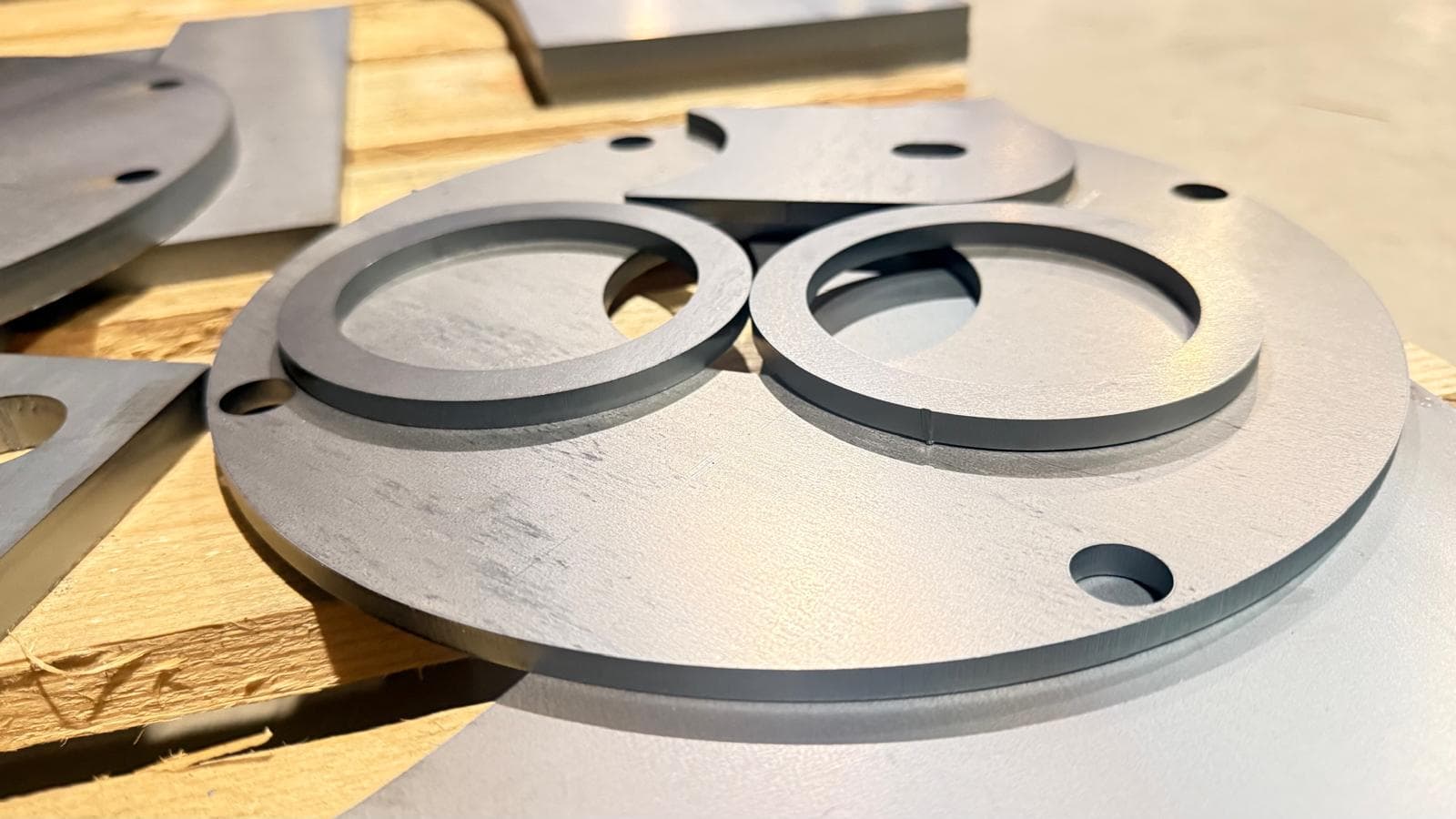
Laser Cutting in Melbourne: Industrial Applications and Benefits
How precision laser cutting supports commercial and industrial manufacturing — applications, benefits, and when to use it.
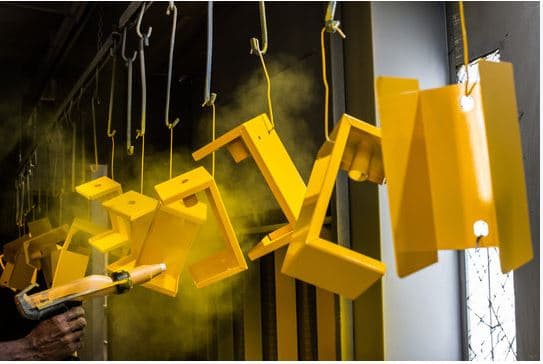
Powder Coating for Commercial Metal Fabrication: What You Need to Know
Why powder coating is the preferred finish for commercial metal fabrication — durability, appearance, and production efficiency.